
Praxis 1: Transformer-Based High Voltage Boost Converter – Implementation and Testing
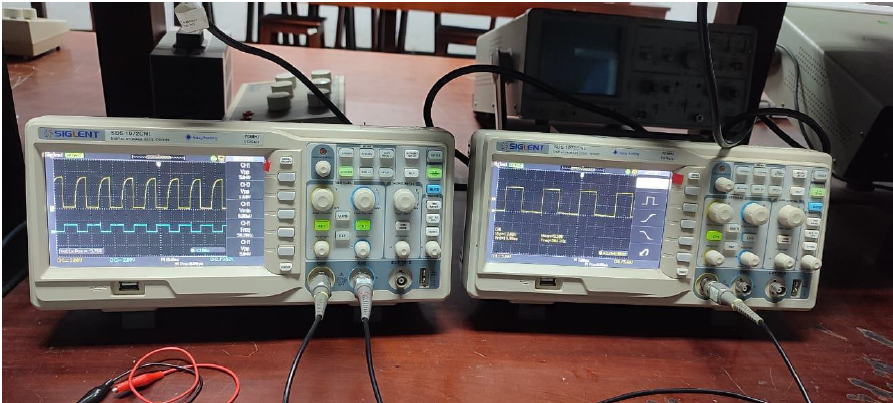
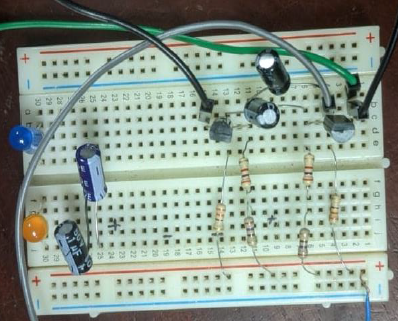
A transformer-based high voltage boost converter was implemented and tested to gain practical experience in power electronics. The system included regulators, an astable multivibrator oscillator, driver circuits, and a non-overlapping logic circuit using IC 7404 and IC 7408 to generate controlled switching signals. The oscillator was designed to operate at approximately 50 Hz, and the transformer with a suitable turn ratio was used to step up the input voltage to around 230 V AC. During testing, an oscilloscope was used to observe oscillator and switching waveforms, while a multimeter was used to measure voltage levels and verify circuit operation.
Praxis 2: 1:8 Multiplexer using only basic logic gates
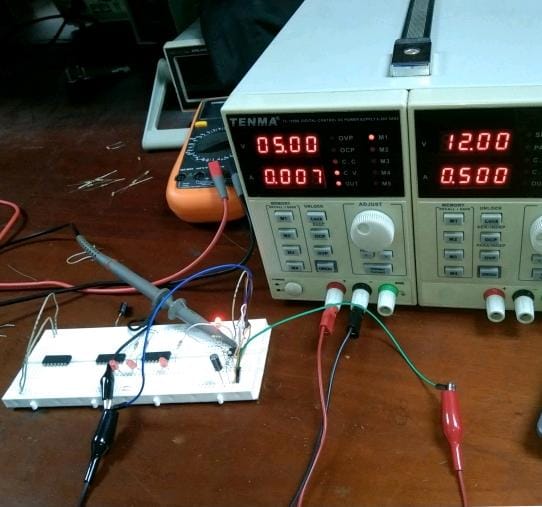
The design and implementation of a 1:8 Multiplexer using only basic logic gates and flip-flops, without using any standard multiplexer or counter ICs. The project includes designing a clock generator using a 555 timer to produce the required clock signal, developing an 8-bit counter using flip-flops and logic gates, and designing the 1:8 multiplexer using basic logic gates.
Praxis 3: PCB Etching and Prototype Development Practice
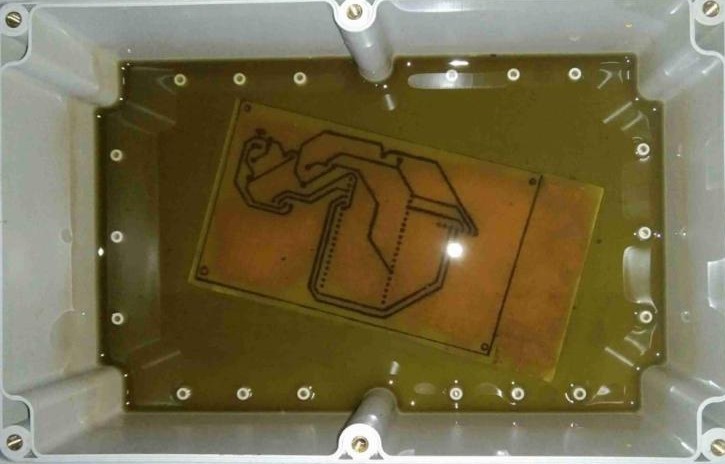
Ferric chloride (FeCl₃) is used as a chemical etchant to remove unwanted copper from the surface of a copper-clad PCB during prototype circuit development. The solution dissolves the exposed copper areas that are not protected by a resist layer, leaving behind the desired circuit pattern. This practice is performed during the early stages of electronic circuit prototyping and testing to help validate circuit functionality before final fabrication.